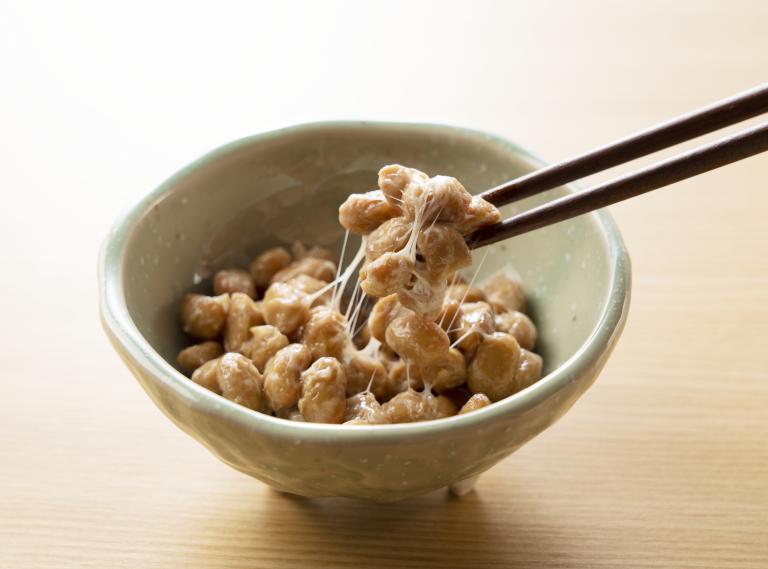

Natto, a dish native to Japan and becoming popular elsewhere, is made by fermenting soybeans with the bacterium B. subtilis. The result is a sticky, stringy, pungent high-protein food rich in probiotic bacteria.
In Japan, natto is often eaten with rice at breakfast. Its characteristic ammonia-like smell comes from fermentation, which produces nattokinase—an enzyme studied for cardiovascular health benefits, including supporting healthy blood pressure, cholesterol, and circulation.
In addition to nattokinase, natto offers biological activity from its enzymes, vitamins, proteins, and amino acids. Research suggests these components support bone health and exhibit antioxidant and antibacterial activity.
Natto’s exceptionally high level of vitamin K2, especially the form menaquinone-7 (MK-7), supports bone health by directing calcium into bones, increasing bone density and helping to prevent osteoporosis and fractures, especially in postmenopausal women.
Research Results
A study, published in Frontiers in Cardiovascular Medicine, with more than 1,000 participants found that a dose of 10,800 fibrinolytic units (FU) of nattokinase per day for a year “effectively managed the progression of atherosclerosis and hyperlipidemia with a significant improvement in the lipid profile.” A lower dose, of 3,699 FU per day, was ineffective according to the study authors.
A literature search (in Reviews in Cardiovascular Medicine) “supports that nattokinase can be used as an effective adjunctive therapy for hypertension,” but the authors suggest that “relatively low-dose supplementation of nattokinase may have no significant lipid-lowering effect.”
Cautions
Those who are allergic to soy should discuss consumption of natto or nattokinase supplements with their healthcare providers, as should anyone who takes blood-thinning medication. And because supplements are more concentrated than food, taking too much may increase risk of excessive bleeding.